

SPIRIT Newsletter March 2026
Click on individual stories or read full newsletter below


Our Story: Building SPIRIT Together
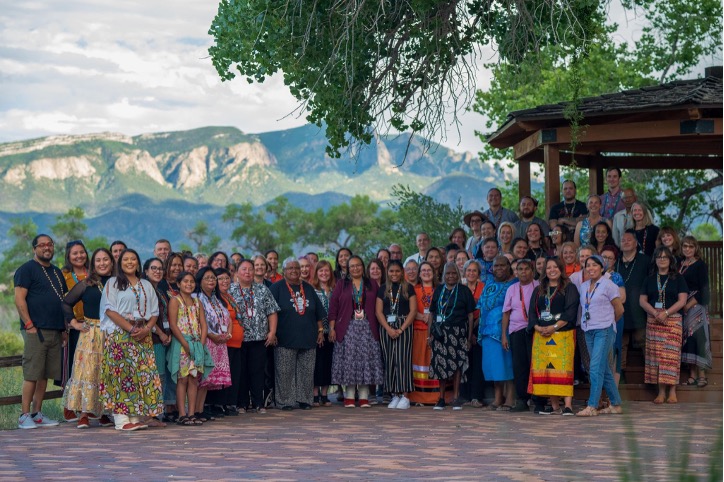
Ever since Family Spirit’s beginnings in the mid-1990s, there has been a shared dream among Center staff to bring Indigenous-grounded home visits to First Nation communities around the world. In December 2022, that dream became a reality when the Johns Hopkins Center for Indigenous Health was named a top international winner of the LEGO Foundation’s Build A World of Play Challenge, receiving $28 million over five years to launch the SPIRIT project: Supporting Play and Intergenerational Relationships with Indigenous Traditions.
SPIRIT brings together two interconnected efforts:
1. Sharing and adapting our Family Spirit home visiting program internationally, and
2. Co-creating intergenerational, nature-based playspaces in 20 Indigenous communities across the United States, Canada, Australia and Aotearoa (New Zealand).
At its heart, SPIRIT is about creating a world that knows, embraces, and supports Indigenous children and their caregivers. Sophia Taula Lieras, who brings over a decade of experience in the home-visiting field, including years of training others in the Family Spirit curriculum, now leads SPIRIT as the Project Director. For her, this initiative is a natural evolution of the Center’s mission to champion thriving Indigenous communities worldwide.
The home visiting component of SPIRIT centers family well-being within Indigenous cultural values. Home visitors provide support for caregivers, strengthen family capacity, and connect families to community resources, local gatherings, and cultural pathways for reclaiming positive identity. These strengths give energy to overcome systemic inequities, such as poor access to water, healthy food, electricity, and basic services. The nurturing of cultural identity – through stories, relationships, and local knowledge – remains foundational to family and community resilience.
Indigenous play has always been a form of medicine – strengthening body, mind, and spirit. It is through play that children learn alongside and across generations: from parents, aunties, uncles, grandparents, elders, siblings, cousins, and the natural world itself. The Indigenous-designed playspaces developed through SPIRIT honor these intergenerational relationships by drawing upon each community’s environment, stories, and values. Across many Indigenous lands in the U.S. and beyond, safe and culturally grounded places for children and their relatives to gather, teach, and play together have been scarce. SPIRIT aims to change that by creating spaces where children can explore and grow, while being held and guided by multiple generations.
To steward this work globally, the Center for Indigenous Health has partnered with organizations across British Columbia, Aotearoa (New Zealand), and Australia that support Indigenous wellbeing, including:
· First Nations Health Authority,
· Te Rōpū Rangahau Hauora a Eru Pōmare at the University of Otago,
· and The University of Queensland.
Each partner is working with communities that embody the heart of this project within their own cultural context. More information about our collective network can be found on our website.
Together we are growing a movement that uplifts Indigenous children, families and communities around the world. As the Māori whakataukī reminds us:
“Ehara taku toa i te toa takitahi, engari he toa takitini.”
My victory is not an individual victory, but a collective victory.
Home Visiting: Jeena’s Story
Family Spirit is a cornerstone of the Center’s work to support thriving Indigenous communities. It is a home visiting model offering 65 culturally relevant lessons for families with infants to three‑year‑olds, alongside training for a network of paraprofessionals.
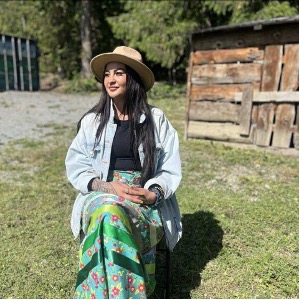
For Jeena Pasacreta, a home visitor for Splatsin Tsm7aksaltn(Splatsin Teaching Centre Society) in British Columbia, Canada, the program represents far more than just a curriculum. It is a support system – one that strengthens Indigenous mothers and caregivers while helping children form early connections to traditional values, teachings and language.
Jeena’s passion for traditional medicine, language revitalization, and cultural knowledge carries into every part of her work. Since completing her training, she now serves 13 families. Her experience as a home visitor has shown her how adaptable the curriculum can be across diverse Indigenous contexts. She loves finding opportunities to weave Splatsin language teachings into her lessons. “Sq7am or milk is medicine,” she says, referring to a lesson on breastfeeding. In a separate lesson about safe sleep, she can share cultural teachings about cradleboards.
In addition to her home-visiting role, Jeena serves on SPIRIT’s Global Advisory Board, where she is recognized as an emergent leader, which makes her role especially meaningful. She brings forward the perspectives of the next generation of caregivers, cultural knowledge keepers, and hands-on experience as a home visitor.
For Jeena and many others in SPIRIT, this work is more than just a career – it is an opportunity to be a part of something larger than themselves. “Elders are getting to see their children and grandchildren dance in ribbon skirts,” she says, “without worry or fear."
To learn more about Jeena’s home visiting story, watch this short video.
Where Culture Shapes Play: Navajo Nation and Aotearoa (New Zealand)
SPIRIT is rooted in the belief that Indigenous play is medicine – strengthening body, mind, family, community and our relationships with the natural world. We envision all children being born into communities that recognize, celebrate, and embrace them. Across SPIRIT partner sites, communities are bringing this vision to life by designing play spaces guided by their own identities, dreams, and lived experiences.
When many people think of play, they imagine plastic castles, brightly colored slides, or maze-like obstacle courses. While common, these structures rarely speak to the cultural environments or day‑to‑day experiences of Indigenous children.
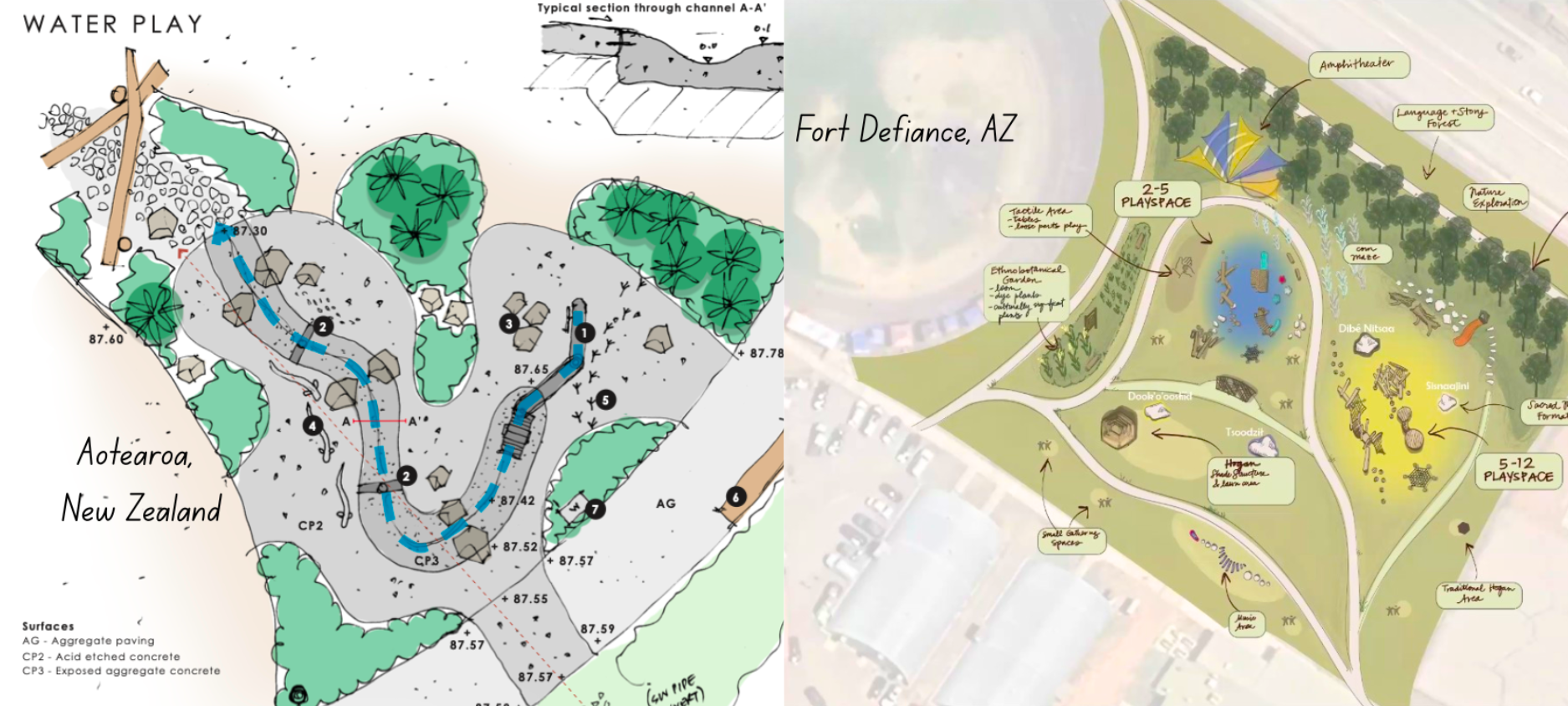
The community‑designed play spaces emerging in Fort Defiance, Arizona, and in Aotearoa (New Zealand) offer a different vision rooted in Navajo and Māori ways of knowing. In Fort Defiance on the Navajo Nation, a flagship site of the Center, community members welcomed the idea with tremendous enthusiasm. Despite having a population of nearly 200,000, the Navajo Nation's communal outdoor areas have long been limited, often just a shaded table or a small open space. This new two-acre play space in Fort Defiance, just miles from the seat of the Navajo Nation government, will incorporate design elements that honor Dinétah (homeland of the Navajo), including visual references to the Four Sacred Mountains that protect and define Navajo homelands.
Home visitor Kim Belone reflects on what the new play space means for families:
“We usually have to take our kids off the reservation just to find a park. So having one built right here in Fort Defiance makes me so happy. All of us have put our hands and hearts into this effort, and I tell my daughter, ‘See, we can have nice things too.’ I want her to know that she and all our children deserve to see growth in our community. They need a place that is their own: safe, beautiful, and reflective of our culture.”
In Aotearoa (New Zealand), Tu Kotahi Māori Asthma Trust is constructing a new community space that will provide children and caregivers with an Indigenous tiny forest experience and a water play area named after Tangaroa, the Māori god of water. Māori cultural elements will include a taniwha slide that winds down a hillside and sensory features like native plants that children can touch, smell, and explore.
Te Whiri o Tangaroa raua ko Hinemoana, the water play area, represents the interweaving of masculine and feminine ocean energies that will have tuna (eel) and little pukeko (a little black bird) tracks engraved throughout the concrete pathway. There will also be fun activities throughout this area, including balancing poles to climb across the swale, stepping rocks, little bridges and beautiful planting. These design choices emerged directly from community conversations about cultural meaning, childhood memories, and what propels children to feel at home in their environment.
For many Elders, parents, and staff, these play spaces are more than places to climb and run – they are sanctuaries that foster a sense of belonging, safety, identity, and joy. Grounded in community leadership and cultural knowledge, they represent healing and hope for generations to come.