
Where Culture Shapes Play: Navajo Nation and Aotearoa (New Zealand)
SPIRIT is rooted in the belief that Indigenous play is medicine – strengthening body, mind, family, community and our relationships with the natural world. We envision all children being born into communities that recognize, celebrate, and embrace them. Across SPIRIT partner sites, communities are bringing this vision to life by designing play spaces guided by their own identities, dreams, and lived experiences.
When many people think of play, they imagine plastic castles, brightly colored slides, or maze-like obstacle courses. While common, these structures rarely speak to the cultural environments or day‑to‑day experiences of Indigenous children.
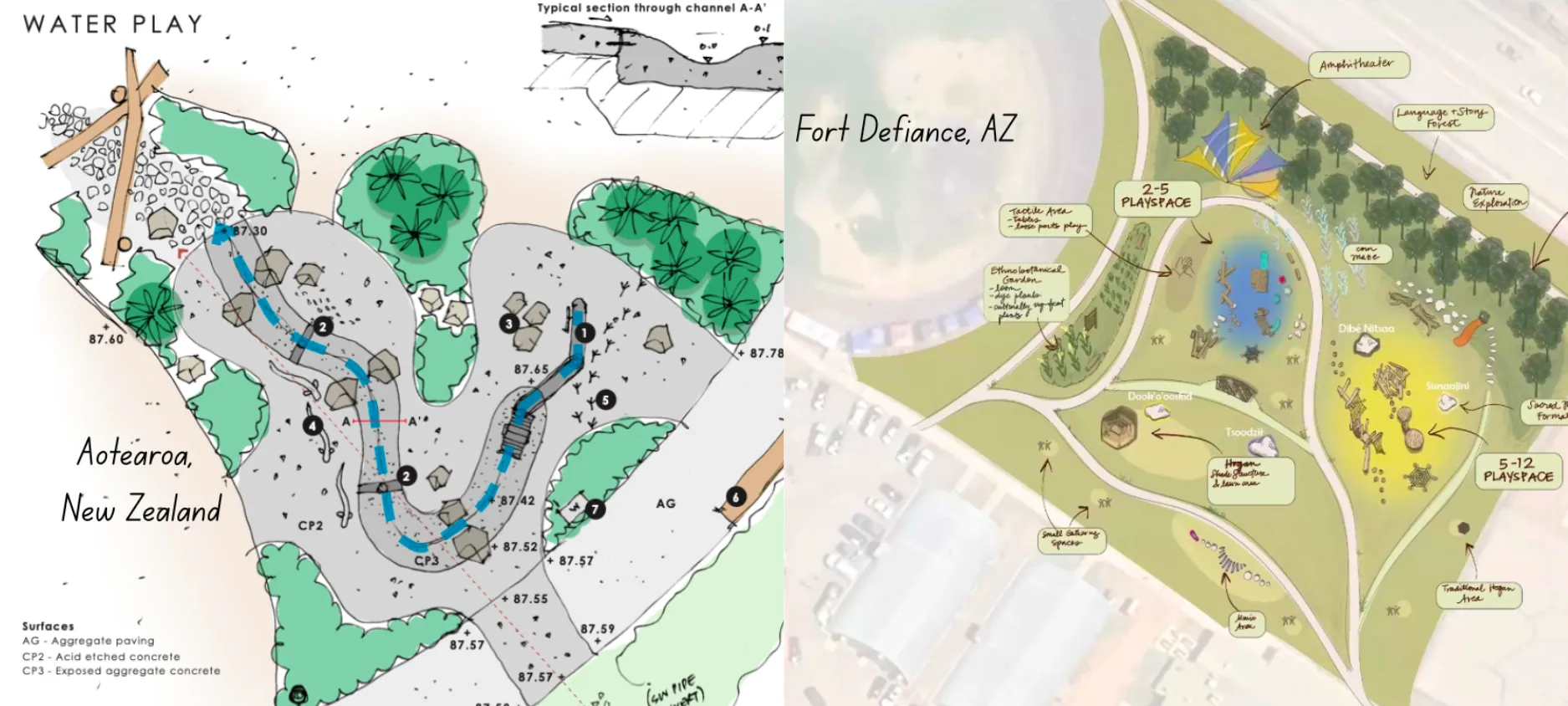
The community‑designed play spaces emerging in Fort Defiance, Arizona, and in Wellington, Aotearoa (New Zealand) offer a different vision rooted in Navajo and Māori ways of knowing. In Fort Defiance on the Navajo Nation, a flagship site of the Center, community members welcomed the idea with tremendous enthusiasm. Despite having a population of nearly 200,000, the Navajo Nation's communal outdoor areas have long been limited, often just a shaded table or a small open space. This new two-acre play space in Fort Defiance, just miles from the seat of the Navajo Nation government, will incorporate design elements that honor Dinétah (homeland of the Navajo), including visual references to the Four Sacred Mountains that protect and define Navajo homelands.
Home visitor Kim Belone reflects on what the new play space means for families:
“We usually have to take our kids off the reservation just to find a park. So having one built right here in Fort Defiance makes me so happy. All of us have put our hands and hearts into this effort, and I tell my daughter, ‘See, we can have nice things too.’ I want her to know that she and all our children deserve to see growth in our community. They need a place that is their own: safe, beautiful, and reflective of our culture.”
In Wellington, Aotearoa (New Zealand), Tu Kotahi Māori Asthma Trust is constructing a new community space that will provide children and caregivers with an Indigenous tiny forest experience and a water play area named after Tangaroa, the Māori god of water. Māori cultural elements will include a taniwha slide that winds down a hillside and sensory features like native plants that children can touch, smell, and explore.
Te Whiri o Tangaroa raua ko Hinemoana, the water play area, represents the interweaving of masculine and feminine ocean energies that will have tuna (eel) and little pukeko (a little black bird) tracks engraved throughout the concrete pathway. There will also be fun activities throughout this area, including balancing poles to climb across the swale, stepping rocks, little bridges and beautiful planting. These design choices emerged directly from community conversations about cultural meaning, childhood memories, and what propels children to feel at home in their environment.
For many Elders, parents, and staff, these play spaces are more than places to climb and run – they are sanctuaries that foster a sense of belonging, safety, identity, and joy. Grounded in community leadership and cultural knowledge, they represent healing and hope for generations to come.