
Kelly Hearn and Moana Chapman –
Te Hou Ora Whānau Services
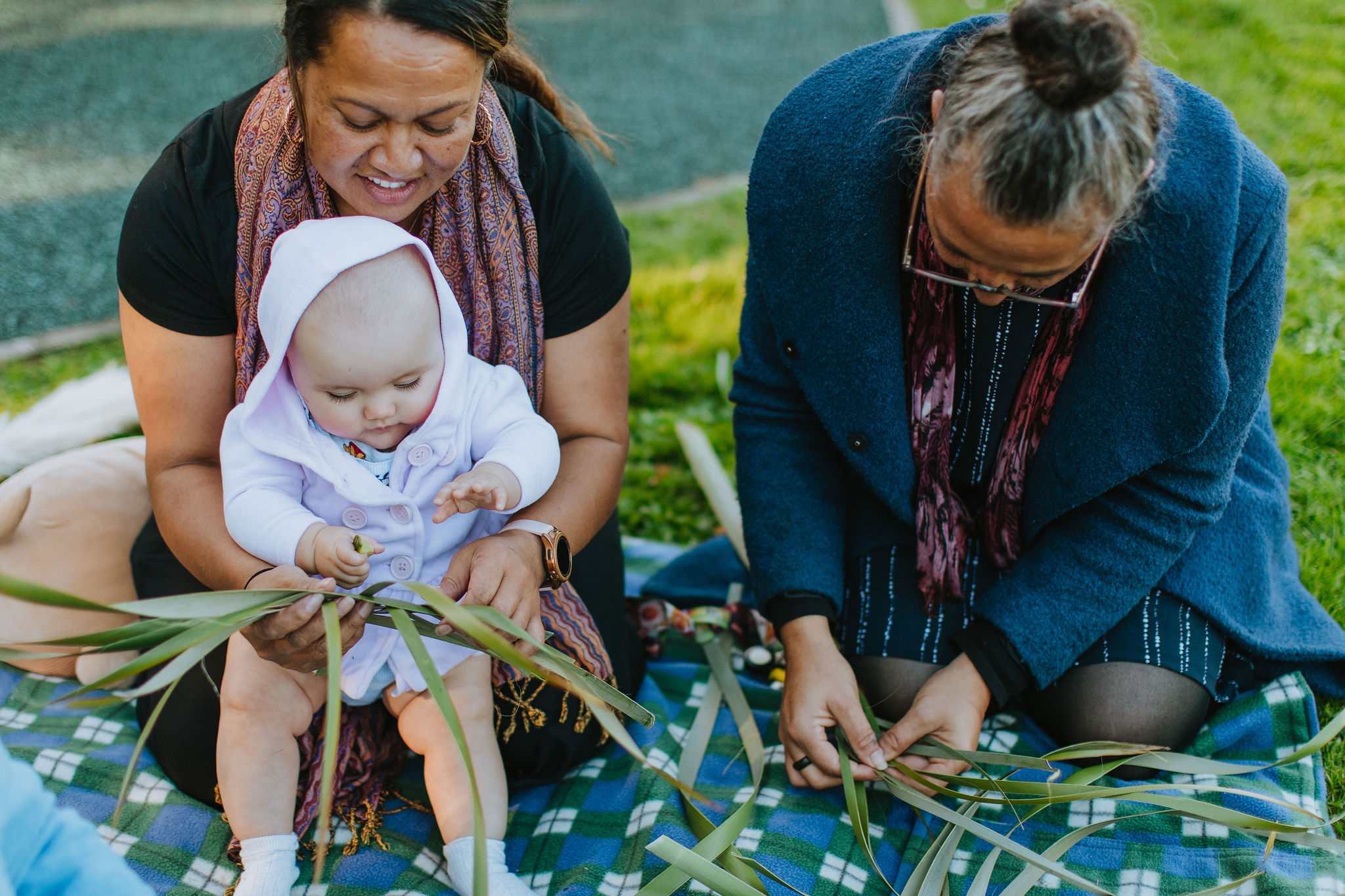
Te Hou Ora Whānau Services is one of our partner communities in Aotearoa (New Zealand). Two of their programs that focus on children 0-6 years include - Hakuitaka Hakorotaka (the breath of our ancestors) and Poipoia te Mokopuna (nurture the grandchild) and aim to create shared spaces for pēpē (babies) and their caregivers to learn about connections to the land and to each other through Māori stories and culture.
Small moments such as picking fruit from the forest turn into cultural lessons and also allow mātua to sit and catch up without their children, Moana said, laughing, being a mom herself. “We teach the children what food they can make with the pears, apples and sometimes even walnuts they pick.” In other lessons, parents learn how to harvest kawakawa, a native New Zealand shrub known for its rongoā (healing) powers, to make tea for upset stomachs or a balm to treat skin rashes.
SPIRIT strives to create spaces for pēpē, tamariki, rangatahi, mama and wider whānau (babies, children, young people, moms and famillies) to be and learn together. A new program, Kaumātua (elder) and pēpē, encourages elders and babies to exercise together; learning and play are shared across generations. A traditional Māori stick exercise involves holding a rākau (stick) and moving it in controlled ways—left, right, up, and down—to develop hand–eye coordination. The practice includes a variety of hand movements that also support gentle stretching and body awareness. This form of exercise is especially beneficial for Kaumātua, as it combines strength, flexibility, and mobility in a low-impact way. It also creates an intergenerational connection, where pēpē can observe and learn from their kaumātua, strengthening both physical wellbeing and cultural continuity.
Kaitiakitanga is the Reo Māori word for actively looking after the environment and its resources. One day, while taking the parents down to the beach, a papa notices that a child has wandered off. Worried he might run off, the papa quickly picked up a thick piece of seaweed.
Dan Houghton’s story
Dan, the papa in this video, is an Indigenous Occupational Therapist who weaves empirical evidence together with Indigenous ways of being and knowing - helping people reclaim meaning in their own lives. While studying developmental theories and the role of 'enriched environments,' he noticed something missing. Western accounts place the responsibility of self-regulation on the child, and the examples of stimulating spaces were man-made playgrounds, structured activities, built environments. But as a father of three, Dan knew something deeper was at play. In Māori understanding, our Māui - the energy that flows through us - is the culmination of everything and everyone that has ever held us. We are not self-made. We are shaped by our whanau (family), and by the natural world itself. This is reflected in a purakau (story) about the rimurapa (seaweed) - said to be one of the last things to fall away from Māui's body as he came ashore, after being raised by his aunties, the winds, and Tangaroa (the sea). The natural world did not just surround him. It held him. It formed him. Our tamariki (children) are no different. The natural world is not a backdrop to development. It is a relative.
It is rare in the modern Western world to find spaces where youngsters and elders can laugh, play and share experiences rooted in Indigenous land-based values. Our collective strives to create more of these spaces in Indigenous communities across the world.